

Arab News. (2021). Research paper: Is digital transformation killing journalism? Retrieved from https://www.arabnews.com/node/1873686/media
Bell, E., Owen, T., & Khorana, S. (2022). The platform press: How Silicon Valley reengineered journalism. Columbia Journalism Review. https://www.cjr.org/tow_center_reports/platform-press-how-silicon-valley-reengineered-journalism.php
Castells, M. (2009). Communication Power. Oxford University Press.
Cuofano, G. (2024, February 23). The New York Times Business Model Analysis. FourWeekMBA. https://fourweekmba.com/the-new-york-times-revenue/
Cornia, A., Sehl, A., & Nielsen, R. K. (2022). Organizational shifts in news media companies. Reuters Institute for the Study of Journalism. https://reutersinstitute.politics.ox.ac.uk/our-research/organizational-shifts-news-media-companies
Duverseau, S. (n.d.). How The New York Times recreated their brand with digital transformation. Smart Panda Labs. https://smartpandalabs.com/blog/how-the-new-york-times-recreated-their-brand-with-digital-transformation/
García-Avilés, J. A., Carvajal, M., & Arias, F. (2023). Digital media innovation: A case study analysis of digital-native news media. Digital Journalism, 11(3), 378-395.
Mandenaki, K., Sotirakou, C., Karampela, A., & Mourlas, C. (2025). Digital literacy and AI in media transformation: Perceptions, challenges and opportunities in four European countries. National and Kapodistrian University of Athens.
McKinsey & Company. (2020). Building a Digital New York Times: CEO Mark Thompson. Retrieved from https://www.mckinsey.com/industries/technology-media-and-telecommunications/our-insights/building-a-digital-new-york-times-ceo-mark-thompson
Myllylahti, M. (2021). The rise of subscription journalism: Strategies, implementation and long-term implications. Digital Journalism, 9(5), 655-671.
Napoli, P. M. (2011). Audience Evolution: New Technologies and the Transformation of Media Audiences. Columbia University Press.
Nielsen, R. K., & Ganter, S. A. (2022). The Power of Platforms: Shaping Media and Society. Oxford Studies in Digital Politics. Oxford University Press.
Niemanlab. (2020). The New York Times’ success with digital subscriptions is accelerating, not slowing down. Retrieved from https://www.niemanlab.org/2020/05/the-new-york-times-success-with-digital-subscriptions-is-accelerating-not-slowing-down/
Novikov, R. Y., & Zohrabyan, E. P. (2023). Digital transformation of media: Challenges and opportunities. Journal of Digital Economy Research, 1(4), 102-125. https://jder.mgimo.ru/jour/article/view/25/43
Picard, R. G. (2022). The economics of journalism and news provision. Journal of Media Business Studies, 19(3), 215-230. https://doi.org/10.1080/16522354.2022.2063331
Poynter. (2016). The New York Times of the future is beginning to take shape. Retrieved from https://www.poynter.org/tech-tools/2016/the-new-york-times-of-the-future-is-beginning-to-take-shape/
RTE News. (2021). New York Times reaches 8 million subscribers, profits up. Retrieved from https://www.rte.ie/news/business/2021/0804/1239044-new-york-times-reaches-8-million-subscribers/
Sehl, A., Cornia, A., & Nielsen, R. K. (2021). Public service media in the digital age: Case studies from six countries. Reuters Institute for the Study of Journalism. https://reutersinstitute.politics.ox.ac.uk/our-research/public-service-news-and-digital-media
Shah, R. N. (2018). Impact of digital media on social knowledge and education. Społeczności Lokalne. Studia Interdyscyplinarne, 2(2), 229-239.
The New York Times Company. (2017). 2020 Report. Retrieved from https://www.nytimes.com/projects/2020-report/index.html
Wang, Y. (2023). Thoughts on the transformation and development of traditional publishing units under the background of digitalization. Communication Power Research, 7(8), 148-150.
Westlund, O. (2021). Mobile news: The next media revolution in the smartphone era. Digital Journalism, 9(5), 603-624.
Zhang, D. (2023). The impact and transformation of digital publishing on traditional print media. The Frontiers of Society, Science and Technology, 5(17), 84-89. https://doi.org/10.25236/FSST.2023.051715



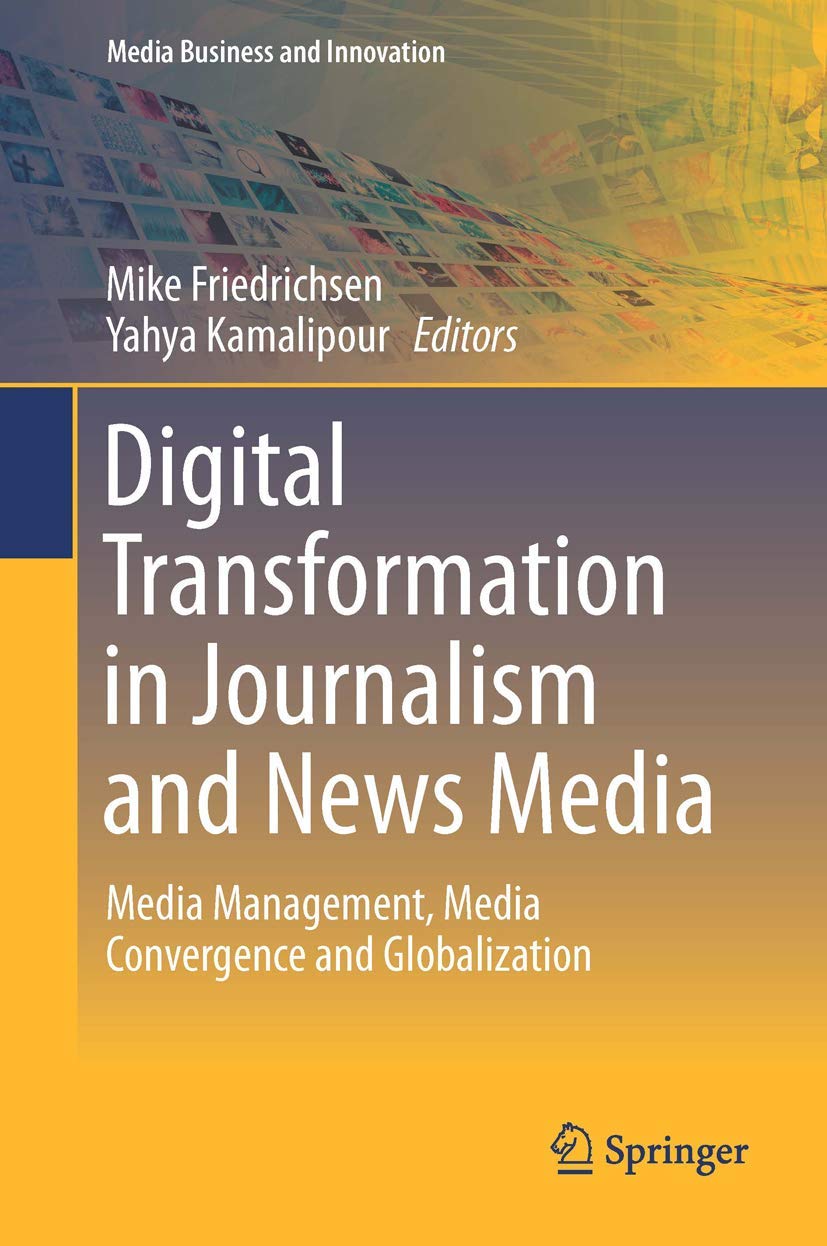
This book written by Mike Friedrichsen and Yahya Kamalipour published on May 10 2017 analyzes various digital transformation processes in journalism and news media. By investigating how these processes stimulate innovation, the authors identify new business and communication models, as well as digital strategies for a new environment of global information flows. The book will help journalists and practitioners working in news media to identify best practices and discover new types of information flows in a rapidly changing news media landscape.
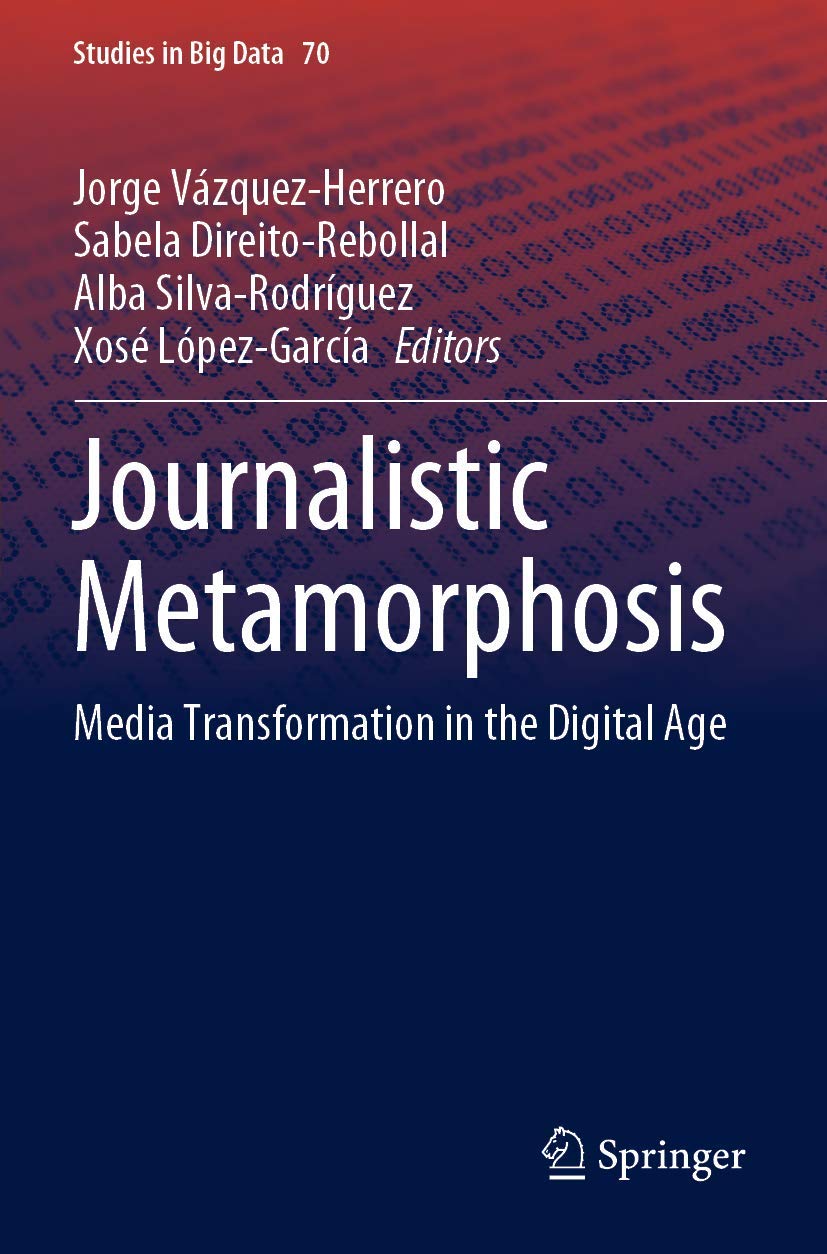
This book written by Jorge Vázquez-Herrero, Sabela Direito-Rebollal, Alba Silva-Rodríguez published on Jan. 4 2021 aims to reflect how journalism has changed in recent years through different perspectives concerning the impact of technology, the reconfiguration of the media ecosystem, the transformation of business models, production and profession, as well as the influence of digital storytelling, mobile devices and participation within the context of glocal information.Journalism innovation implies modifications in techniques, technologies, processes, languages, formats and devices intended to enhance the production and consumption of the journalistic information.This book becomes an interesting resource for researchers and professionals working in news media to identify the best practices and discover new types of information flows in a rapidly changing news media landscape.

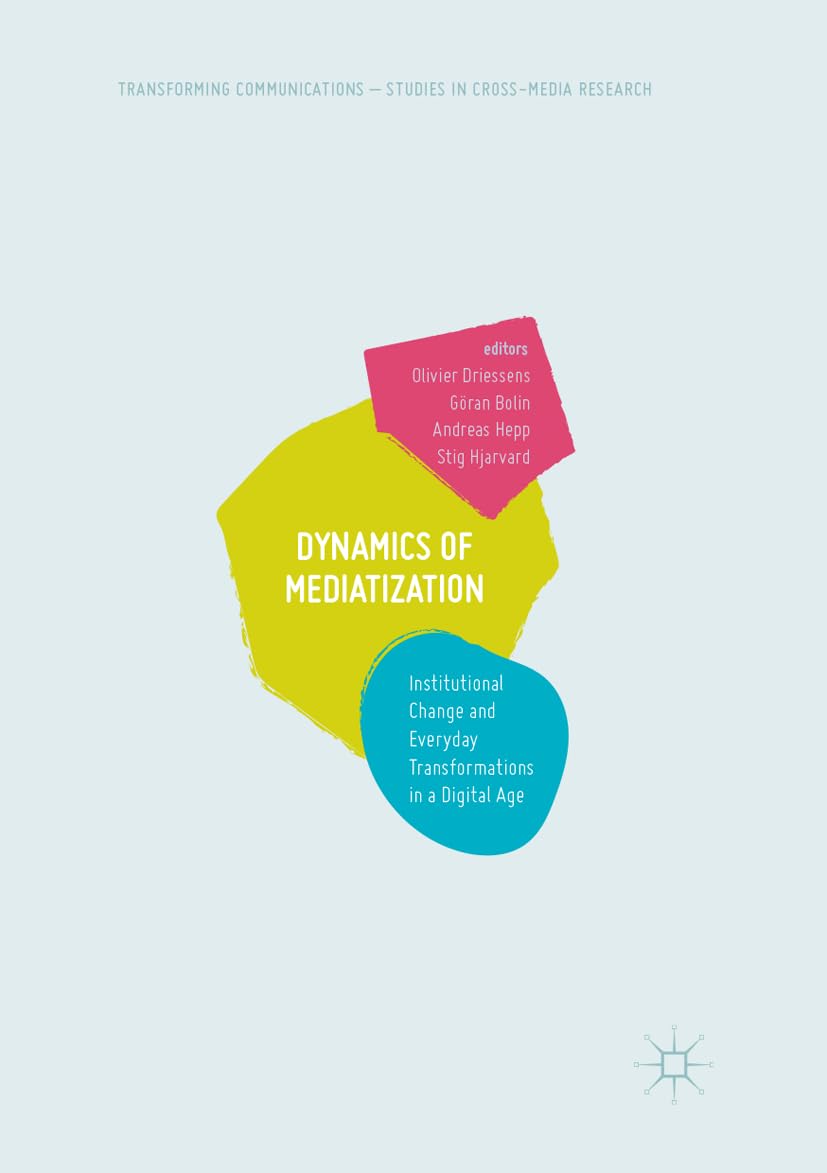
This volume written by Olivier Driessens, Göran Bolin, Andreas Heppsheds published on Aug. 31 2018 light on the underlying dynamics of mediatization, disentangling the actual unfolding of mediatization processes. The wide adoption and deep embedding of digital media and technology brings new questions to mediatization studies: how can we grasp this 'deep mediatization'? In which way should we develop existing approaches of mediatization to analyse such dynamics? What are the consequences of this for theorising and empirically studying mediatization? By using these questions as a starting point, this book presents an innovative and original collection that is dedicated to both the underlying dynamics of mediatization and recent dynamics related to digital media.